




Liquid Filling Machines
Liquid Filling Machines
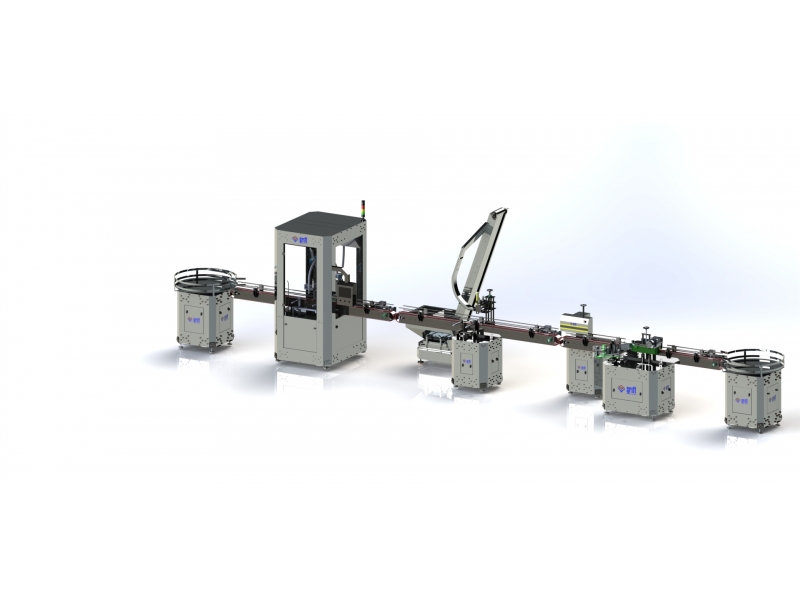
Liquid filling machines are used to accurately and quickly fill a specific amount of liquid (water, oil, milk, chemicals, etc.) into bottles, jars, or other containers. The working principle consists of several basic steps:
1. Product Feeding
The liquid is held in a tank or reservoir. The machine draws the liquid from this tank via pipes and pumps.
2. Container Transport
Empty bottles or containers move along a conveyor belt. Sensors ensure each container is stopped at the correct position.
3. Filling Process
Different filling methods are used depending on the machine type:
Volumetric filling: Filling is done by measuring a specific volume (e.g., 500 ml).
Weight-based filling: Filling is done by checking the weight with a scale.
Level filling: The same filling height is ensured in all bottles.
Time-controlled filling: Filling is done by maintaining a flow for a specific period of time.
During filling, nozzles (filling tips) transfer the liquid to the container. In some machines, the nozzle moves downwards to prevent foaming.
4. Flow Control
Thanks to the pump, valve, and sensors:
Overflow is prevented
The correct amount is provided
Flow is interrupted and started
5. Capping (Optional)
After filling, machines can also automatically perform:
Capping
Screwing
Sealing
operations.
6. Output and Control
The filled products exit via the conveyor belt. In some systems:
Insufficient filling control
Leak testing
Labeling
operations such as these are performed.
Application Areas
Food (water, milk, fruit juice, oil)
Cosmetics (shampoo, lotion)
Chemicals (cleaning products)
Pharmaceutical industry
Important Point
Not all liquids are the same. The choice of machine depends on:
Density (fluid or thick?)
Foaming level
Hygiene requirements