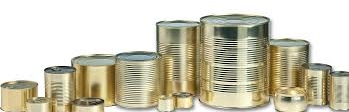




Canned Food Sealing Machine
Canned Food Sealing Machine
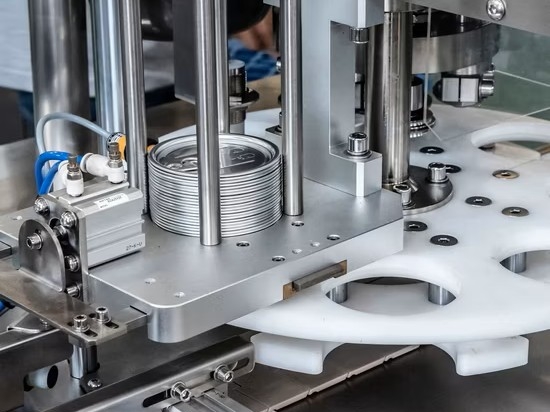
Can sealing machines are systems used to airtightly seal the lids of filled metal cans. This process is generally done using a mechanical method called double seaming and is a critical step in terms of food safety.
Basic Working Principle
The purpose of the machine is to create a tight seal by folding the can body and the lid together. This process takes place in several stages:
1. Can and Lid Placement
The can filled with the product arrives at the machine.
The lid is placed on top of the can (it is not yet fixed).
2. Compression (chuck and plate)
The can is pushed upwards from below by a plate and pressed against the upper stabilizing part (chuck).
This stage ensures that the lid is held in the correct position.
3. 1st Seaming Operation
The first roller folds the edge of the can and the edge of the lid towards each other.
At this stage, the parts interlock but are not yet completely tight.
4. 2nd Seaming Operation
The second roller comes into play.
The folded metal sheets are further compressed and flattened. This creates a completely leak-proof connection.
5. Exit
The sealing is complete.
The can exits the machine and usually goes to the sterilization (autoclave) stage. Basic technology used
These machines use Double Seaming technology. In this method:
The can body fold
The lid fold
are interlocked to create a tight 5-layer structure.
Where is it used?
Canned foods (beans, tuna, vegetables)
Beverage cans
Pet food
Chemical and industrial products
Why is it so important?
If the sealing is not done properly:
Air and bacteria enter
The product spoils
There is a risk of food poisoning
Therefore, in production, the following are frequently performed:
leak tests
microscopic seam inspection
pressure tests
Additional features
In modern machines:
Vacuum sealing
Gas (nitrogen) injection
Automatic fault detection
High speed (hundreds of boxes per minute)
Packaging Types